Why Your Crepe Myrtle Keeps Coming Back (And How to Stop It for Good)
You cut the crepe myrtle down. Hauled off the trunk. Cleaned up the branches. Job done — or so you thought.
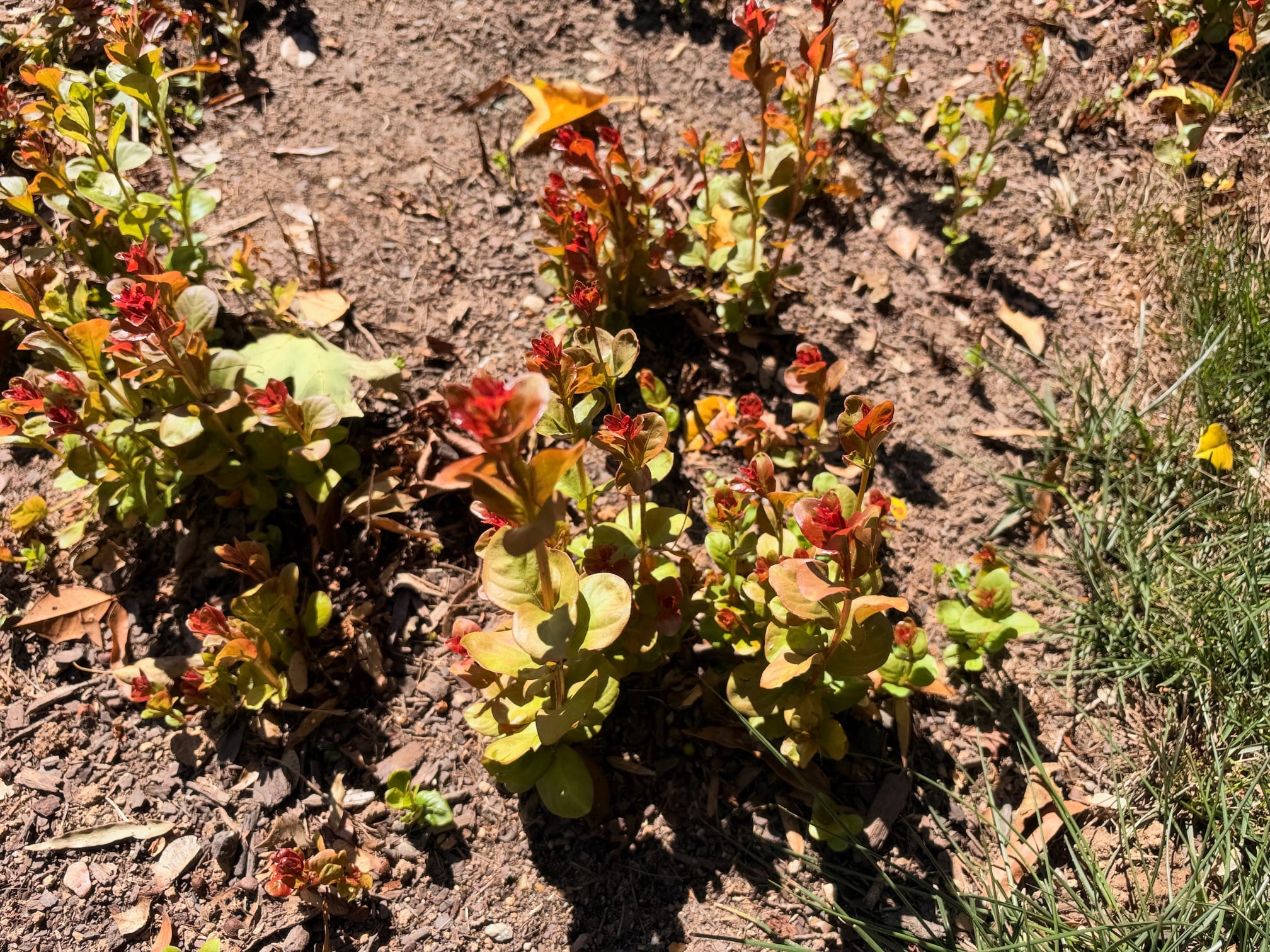
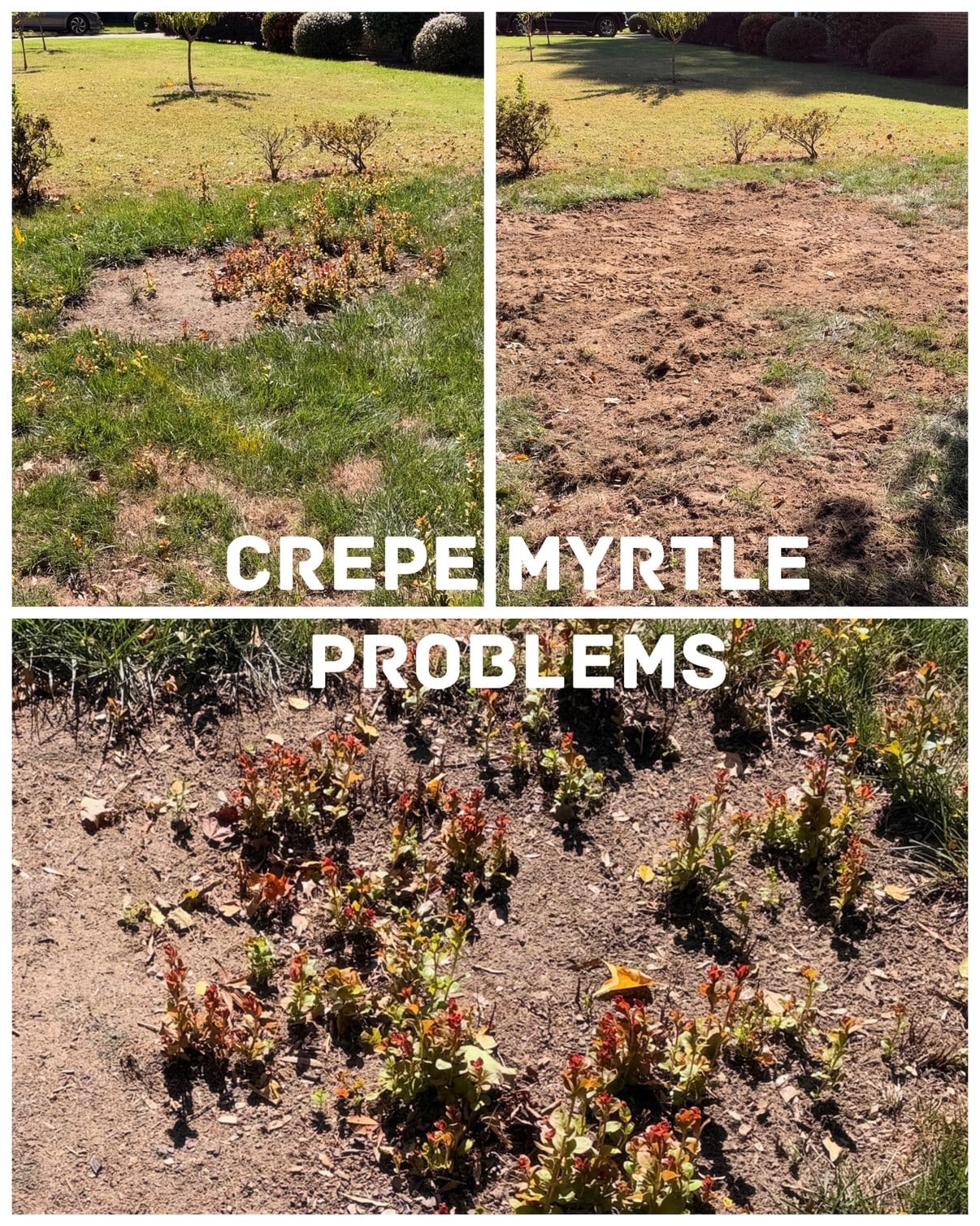
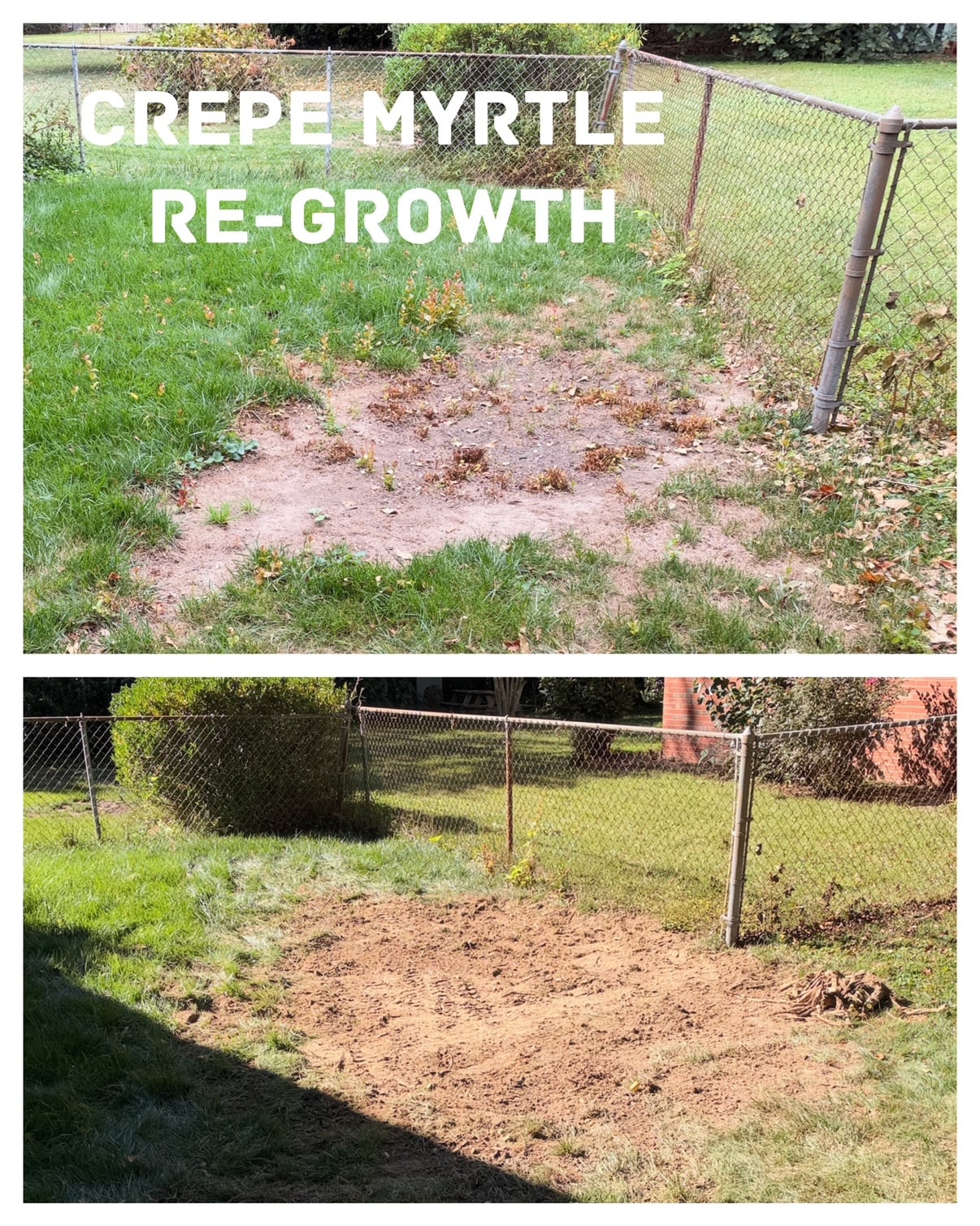
Then a few weeks later, a cluster of skinny green shoots pops up around the stump. Then more of them, a few feet away. By midsummer you've got a thicket of flimsy sprouts where a tree used to be, and every time you cut them back they come in thicker.
I see this constantly. Crepe myrtle removals are one of the most common jobs we get — usually from a homeowner who's spent a season or two losing the fight against suckers before calling us. So let me explain what's actually going on down there, because once you understand it, the fix makes perfect sense.
Why crepe myrtles refuse to stay down
A crepe myrtle (Lagerstroemia indica — also called crape myrtle or Indian crape myrtle) doesn't just grow from its trunk. Right where the trunk meets the roots sits a zone packed with dormant buds, spread across the root crown and out along the lateral roots. As long as the main trunk is standing, those buds stay asleep — the growing tips up top produce a hormone (auxin) that keeps them suppressed.
The day you cut the trunk off, that suppression disappears. Every dormant bud on the stump and root system wakes up at once.
Here's the part that surprises people: a mature crepe myrtle has a large, established root system loaded with stored energy. That's why the regrowth comes back faster than the original tree ever grew — the roots are funding an emergency rebuild. Southern gardeners even have a name for the extreme version of this: "crape murder," the habit of topping crepe myrtles back to stubs every winter, only to watch them explode back with even more vigorous (and weaker) growth. The plant is built to survive exactly this kind of damage.
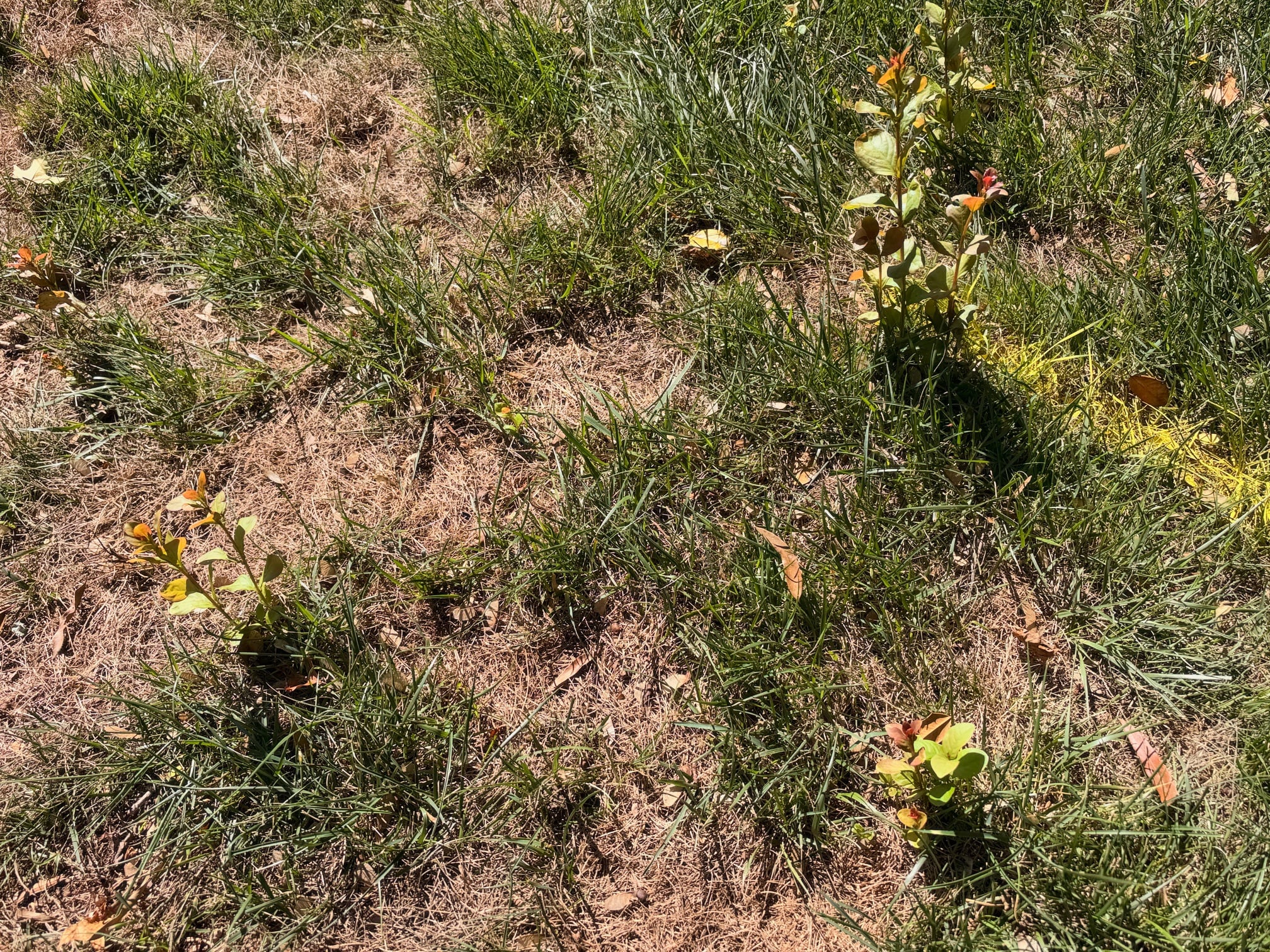
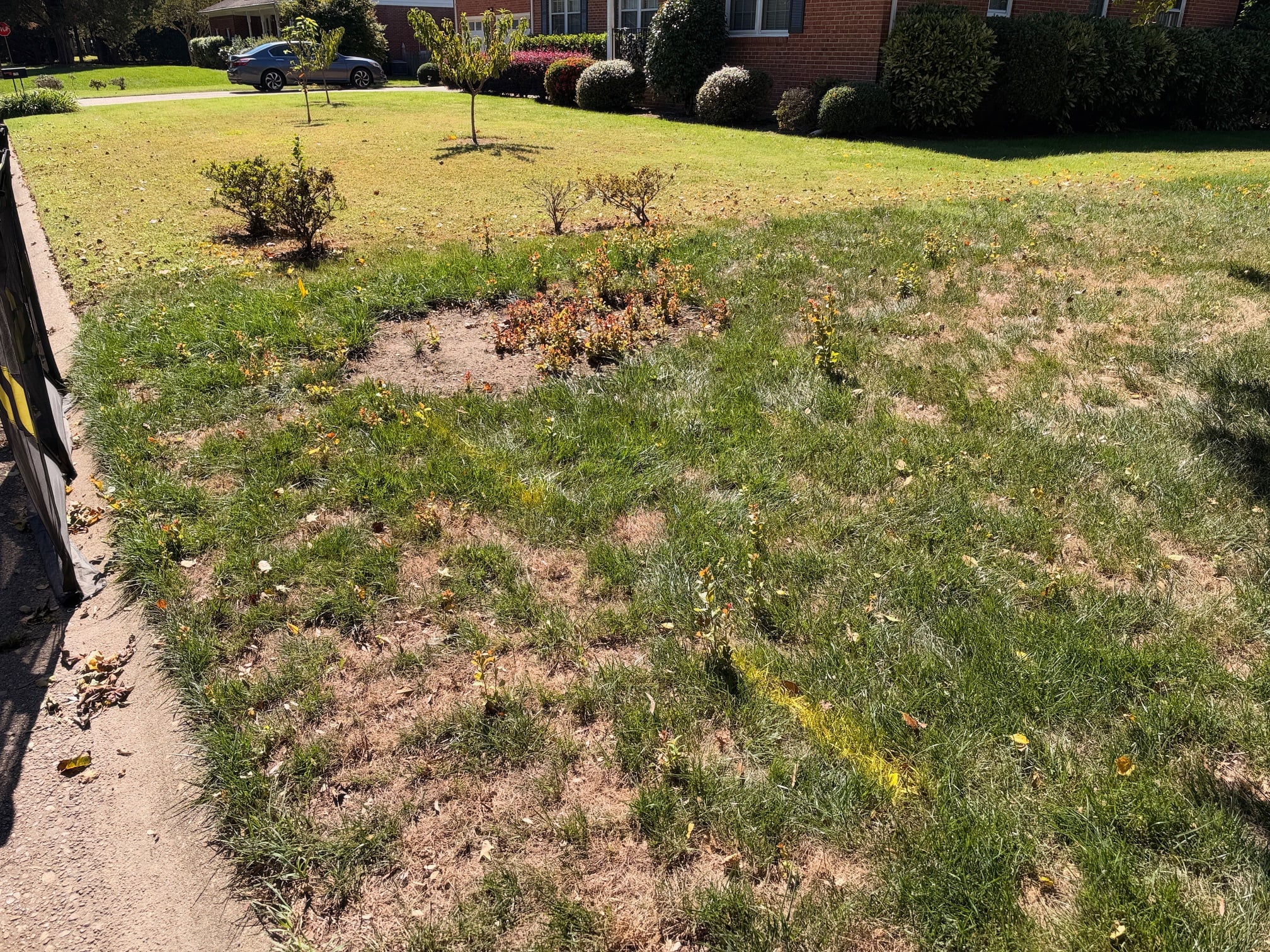
And those buds aren't just on the stump. They run out along the shallow, spreading lateral roots — which is why we get calls about shoots coming up several feet from where the trunk used to stand, and the homeowner is convinced it's a different plant. It's not. It's the same root system.
Why cutting alone never finishes the job
I'll be straight with you: a chainsaw removes the trunk and nothing else. It does nothing to the living root crown or the buds sitting on the roots. So the plant does what it's designed to do — it resprouts, usually denser and more multi-stemmed than the original tree. Most of our customers tell us the regrowth looked worse than what they cut down.
The usual follow-up attempts don't get you there either:
- Mowing or cutting the suckers just wakes up more buds. You're pruning the top off a plant with a full fuel tank underneath. It can take years to exhaust the root reserves this way — if it ever happens. I've seen people do this for three, four seasons and the suckers never quit.
- Drilling and pouring chemicals gives inconsistent results, the regrowth often returns anyway, and you risk killing nearby plants you actually wanted to keep.
- Digging it out by hand is backbreaking work, and it's easy to leave a root fragment behind that sprouts right back. One missed piece and you're starting over.
What "taking it out for good" actually looks like
When we take on a crepe myrtle, we're not grinding a stump — we're destroying the bud bank. The root crown and the major lateral roots carrying those dormant buds all have to go. In practice, that means:
The usual follow-up attempts don't get you there either:
- We grind well below grade. Not flush with the lawn — deep enough to take out the root crown entirely. This matters more for crepe myrtles than for most ornamental trees, because the crown is where the densest concentration of buds lives. Shallow grinding is the number one reason these jobs fail.
- We chase the lateral roots. The major surface and spreading roots in the immediate area get ground out too, since those are the ones sending up suckers feet from the stump.
- We clean up the site. Grindings get removed or worked back in depending on what you want for the spot, and we leave the area clean — ready for sod, mulch, or a new planting.
We run the 811 utility check before we grind, every time. Those lateral roots often share space with buried lines, and we don't guess about that.
The short version
We're BROOTFORCE STUMP Co — veteran-owned, engineer-operated, serving Virginia Beach and the Hampton Roads area. I approach every stump like a system: find the part that keeps it alive, eliminate that part, verify the result. For crepe myrtles, that means the root crown and the lateral roots, ground out deep and cleaned up right.
One visit, done right — versus years of cutting suckers.
Frequently Asked Questions
Yes. Dormant buds on the root crown and lateral roots will send up new shoots, often within weeks of cutting. The larger the old root system, the more vigorous the regrowth.
Deeper than most people expect. The goal isn't just to make the stump disappear — it's to destroy the root crown below the surface, where the buds are concentrated. Shallow grinding leaves the problem intact.
If the root crown is fully destroyed, suckering stops. If it's only cut back, expect regrowth for years — the root reserves are substantial.
Yes, once the stump and major roots are ground out and the area is cleaned up. Many of our customers replant, sod, or mulch the spot right away.
Grinding destroys the stump, root crown, and the major roots we chase. Small, deep root fragments left behind decompose naturally and don't have the bud density to resprout the way the crown does.
Yes — same tree (Lagerstroemia indica). "Crape" is the traditional horticultural spelling; "crepe" is the common everyday spelling. You'll also see it written as one word ("crapemyrtle") and occasionally called Indian crape myrtle. Whatever you call it, the stump problem is identical.
Fighting crepe myrtle suckers in Virginia Beach, Chesapeake, Norfolk, or anywhere in Hampton Roads? Contact BROOTFORCE STUMP Co — we'll take it out once, and take it out for good.