What to Do With Wood Chips After Stump Grinding
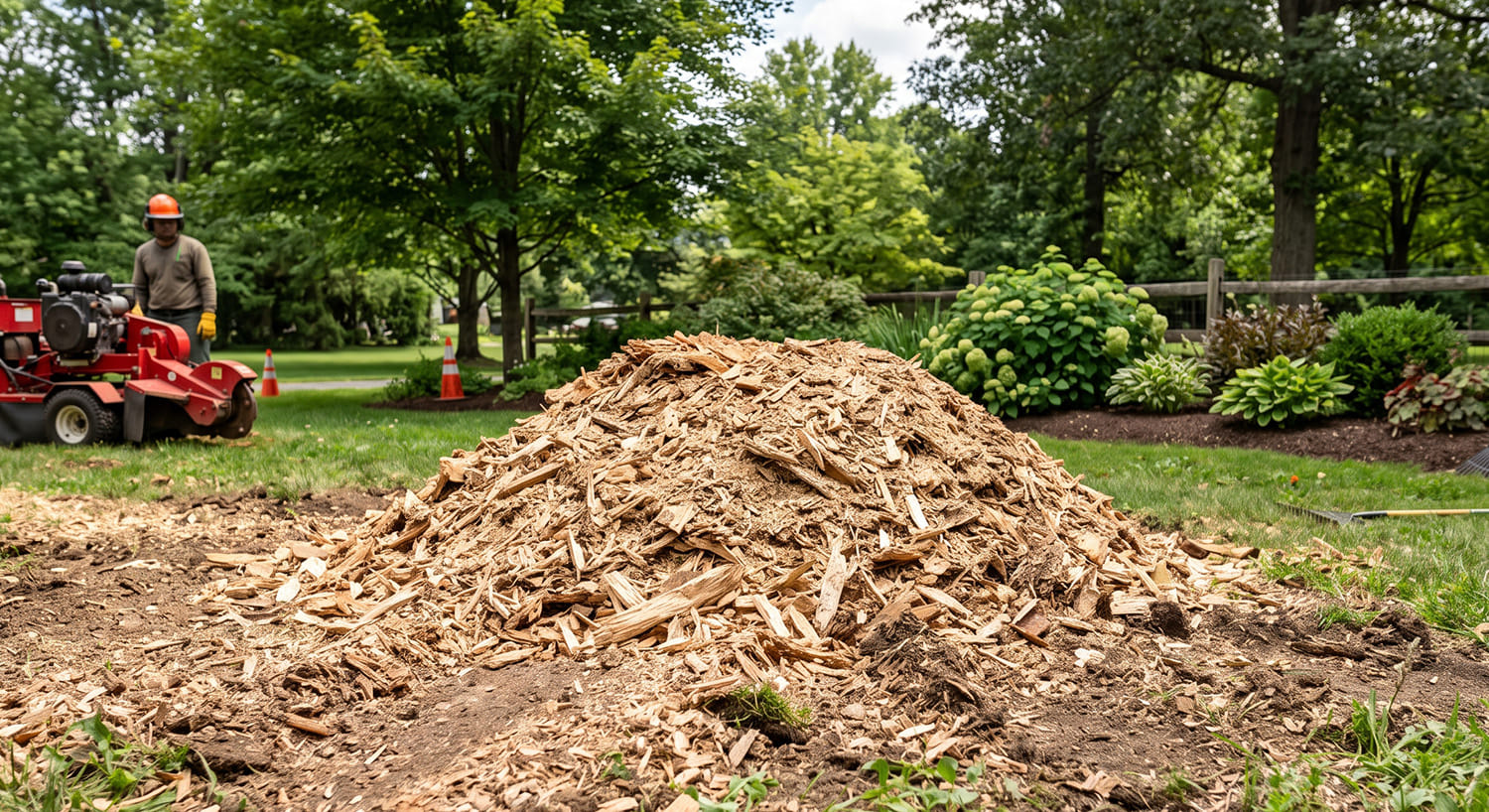
The Job Is Done. Now There's a Pile of Chips.
After a stump is ground, what's left is a mix of dirt, chipped wood, and root material — the natural byproduct of the grinding process. It piles up where the stump was, and the question becomes what to do with it.
The good news: you have options, and none of them are complex, but they can be labor intensive. Here's the practical breakdown.
Option 1 — Use Them as Mulch
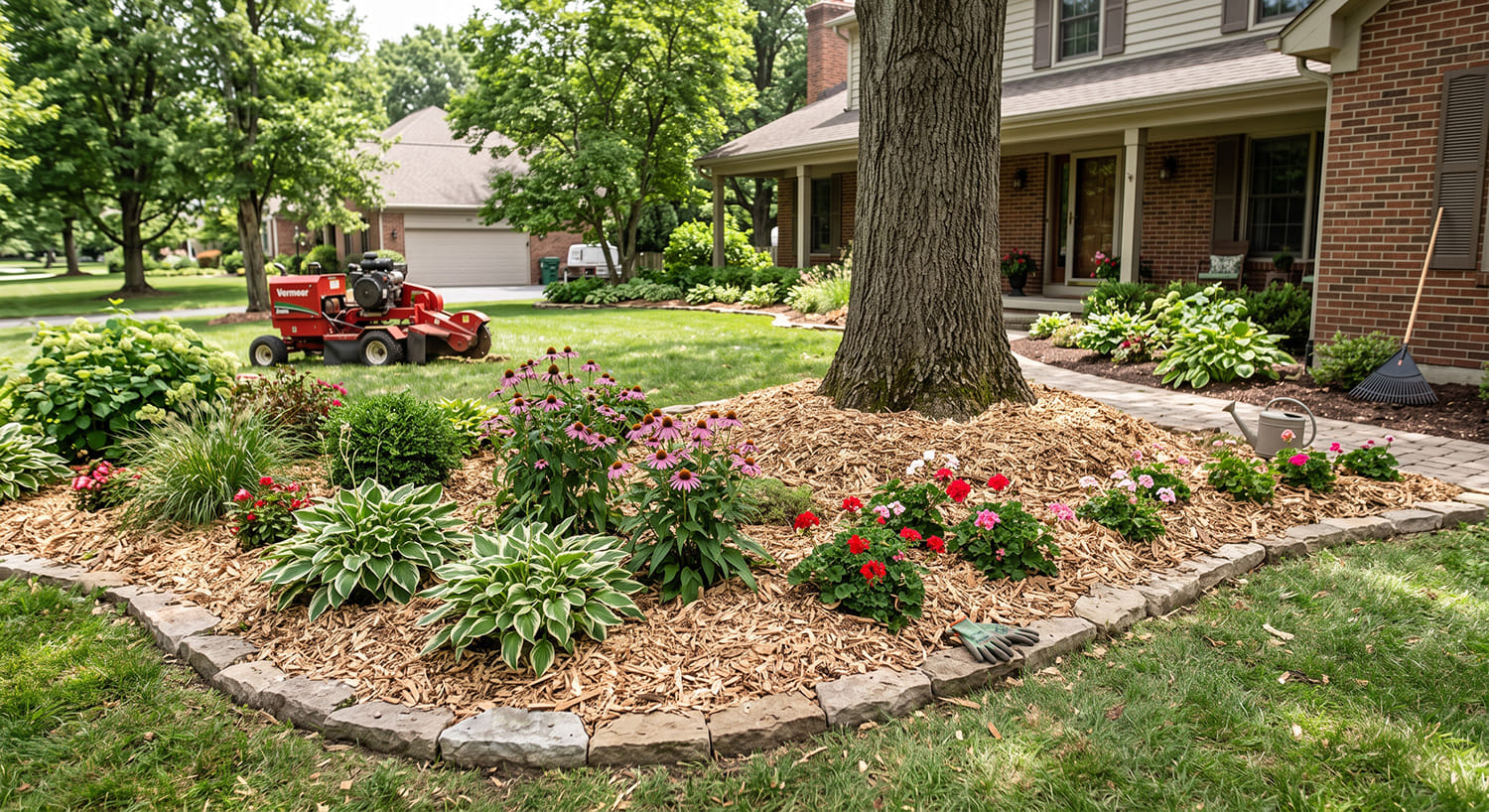
Wood chips from a freshly ground stump are decent mulch. They hold moisture, suppress weeds, and break down over time adding organic material back into the soil. If you have garden beds, tree rings, or pathway areas that could use a layer of mulch, this is the most practical use for the chips.
A few things to keep in mind:
- Keep chips away from your house foundation — wood mulch against a foundation can hold moisture and attract termites. Keep a clear gap of at least 10-12 feet.
- Don't use them in vegetable gardens — fresh wood chips can temporarily tie up nitrogen in the soil as they break down, which isn't ideal for vegetable beds. Ornamental beds are fine.
- They'll break down over one to two seasons — by the following year they'll have decomposed significantly into the soil.
- They are heavy. There can be more dirt than wood chips after certain grinding jobs.
Option 2 — Leave Them in a Neat Pile
If you want to use the chips but not right now, we can pile them neatly in a corner of your yard. They'll stay usable for many months and you can spread them yourself when you're ready. This will also allow the dirt to sink down as it rains, allowing more of the wood chips to rise to the surface.
This also works if you're planning to bag and dispose of them yourself or have a hauling service coming. A neat pile is easier to work with than chips spread across the ground.
Option 3 — Add Topsoil Over the Grinding Area
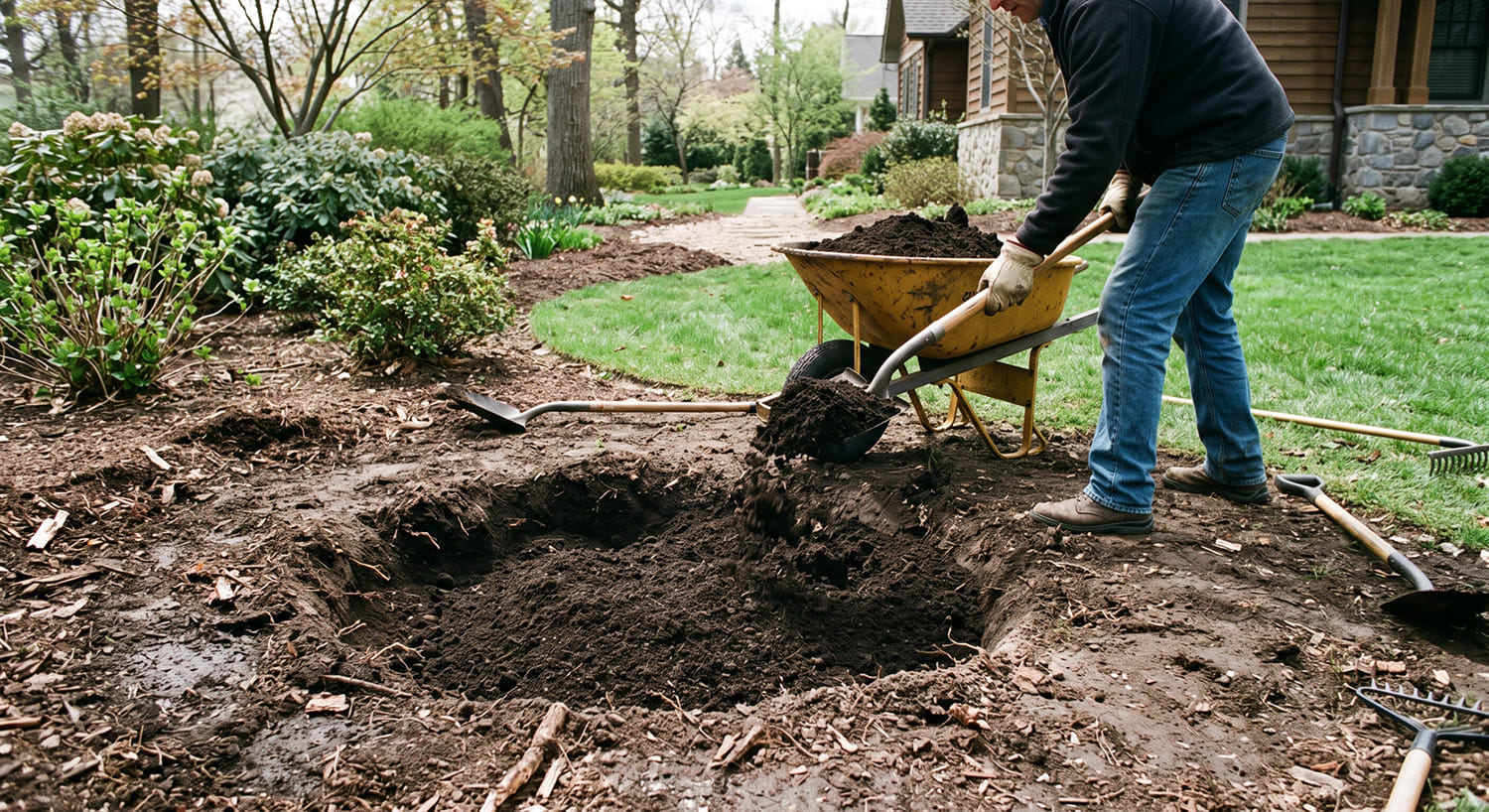
If your goal is to restore the lawn — seed or sod where the stump was — the chips need to come out of the depression first. Once the chips are removed or spread elsewhere, the area where the stump was will have a depression that needs to be filled.
Adding topsoil to bring the area level with or just slightly above the surrounding grade. From there you can seed, lay sod, or plant whatever you have planned. Fall is the best time in Hampton Roads to establish new grass from seed — if you're grinding in fall, plan to seed right behind it for the best result.
What About Leaving the Chips in the Hole?
Some homeowners ask if they can just leave the chips in the depression and let them break down naturally. The honest answer is: you can, but it's not ideal. As the chips decompose they'll settle and sink, leaving a low spot in your yard that can be uneven for years. If the area is out of the way and you're not planning to use it for anything, it's not a disaster — but if you want a flat, usable lawn, removing the chips and adding topsoil is the right move.
What We Do Before We Leave
By default we leave the chips neatly piled above the stump area or just off to the side — we take care of it as part of the job. We don't leave a mess and we don't leave until we know you're happy with how the area looks.
Questions about what to expect after your stump is ground?
Text us or request an estimate — BROOTFORCE STUMP Co. walks you through the whole process.