The Real Cost of a Poorly Done Stump Grinding Job
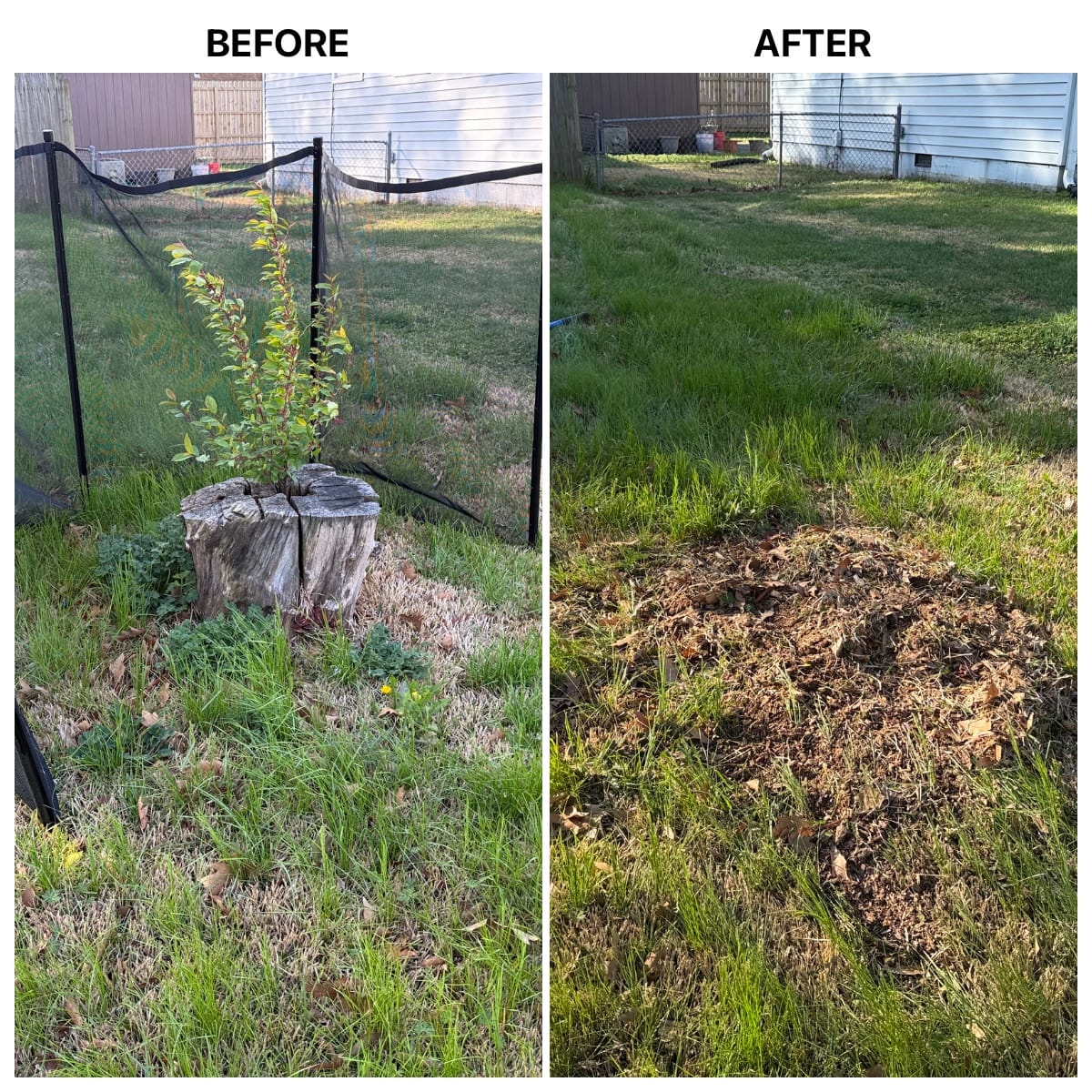
Some Jobs Look Done. They’re Not.
A stump grinding job looks finished when the stump is gone and the chips are spread around. But ‘the stump is gone’ and ‘the job is done right’ aren’t always the same thing.
There’s a specific failure mode in stump grinding that we see regularly — and it costs homeowners money they shouldn’t have to spend.
Here’s what it is, why it happens, and what it costs to fix.
What a Properly Ground Stump Actually Looks Like
When a stump is ground correctly, the grinding extends beyond the edge of the stump itself — wide enough around the perimeter that when the wood chips are removed and 3 to 4 inches of topsoil are added, the finished area is completely level with the surrounding yard.
No mound. No raised center. Flat.
The depth matters too. For a yard that’s going back to grass, 4 to 6 inches below the surrounding grade is standard. For construction, concrete, or fence posts, deeper grinding is required — sometimes up to 20 inches depending on the application.
Get both of these right and the job is done. Miss either one and you have a problem.
The Most Common Failure — Ground Too Narrow
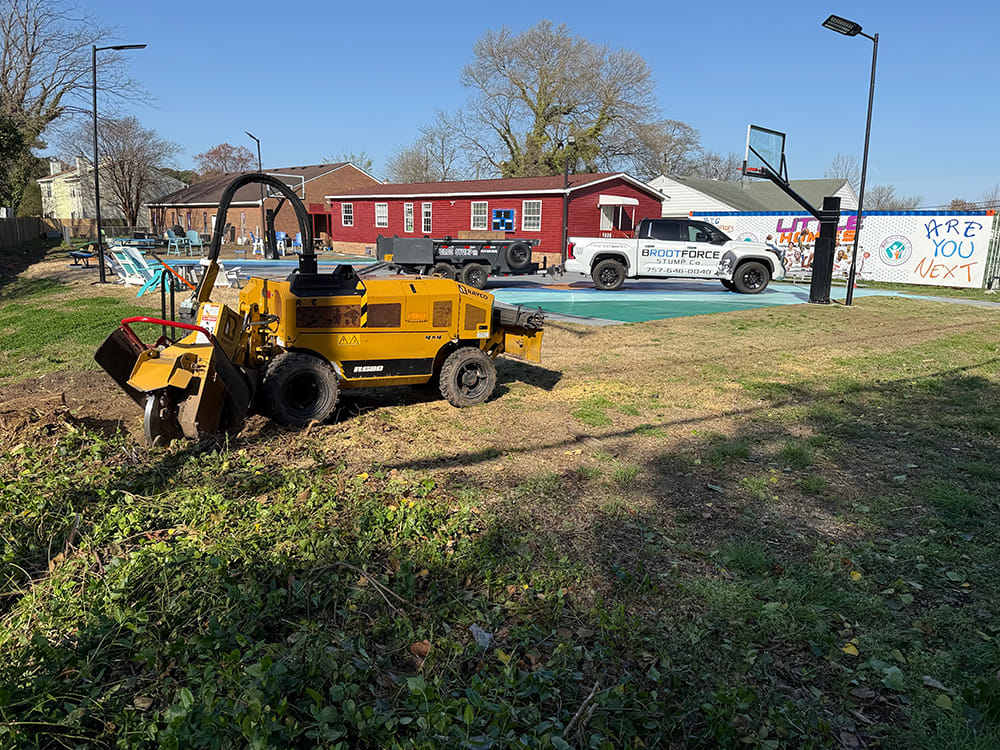
The most common mistake we see from operators using undersized or underpowered equipment is grinding that stops at the edge of the stump.
The stump is gone, technically. But the root flare — the area where the roots spread out from the base — wasn’t addressed. That material is still there, just below the surface.
When the chips are removed and topsoil is added, the center of the area sits higher than the edges. You end up with a mound. The yard isn’t flat. And no amount of topsoil is going to fix that without addressing the underlying grinding that wasn’t done.
The Second Common Failure — Ground Too Shallow
Grinding to 2 or 3 inches below the grade right next to the tree might seem like enough. But once you remove the chips and add topsoil, you’ve used up most of that depth and the area still ends up slightly elevated or uneven.
Over time, as the remaining root material continues to break down unevenly, the area can develop low spots and settlement issues.
For standard lawn restoration, 4 to 6 inches below the grade of the surrounding yard is the minimum. Anything shallower is cutting corners on depth.
How Much Does a Re-Grind Cost?
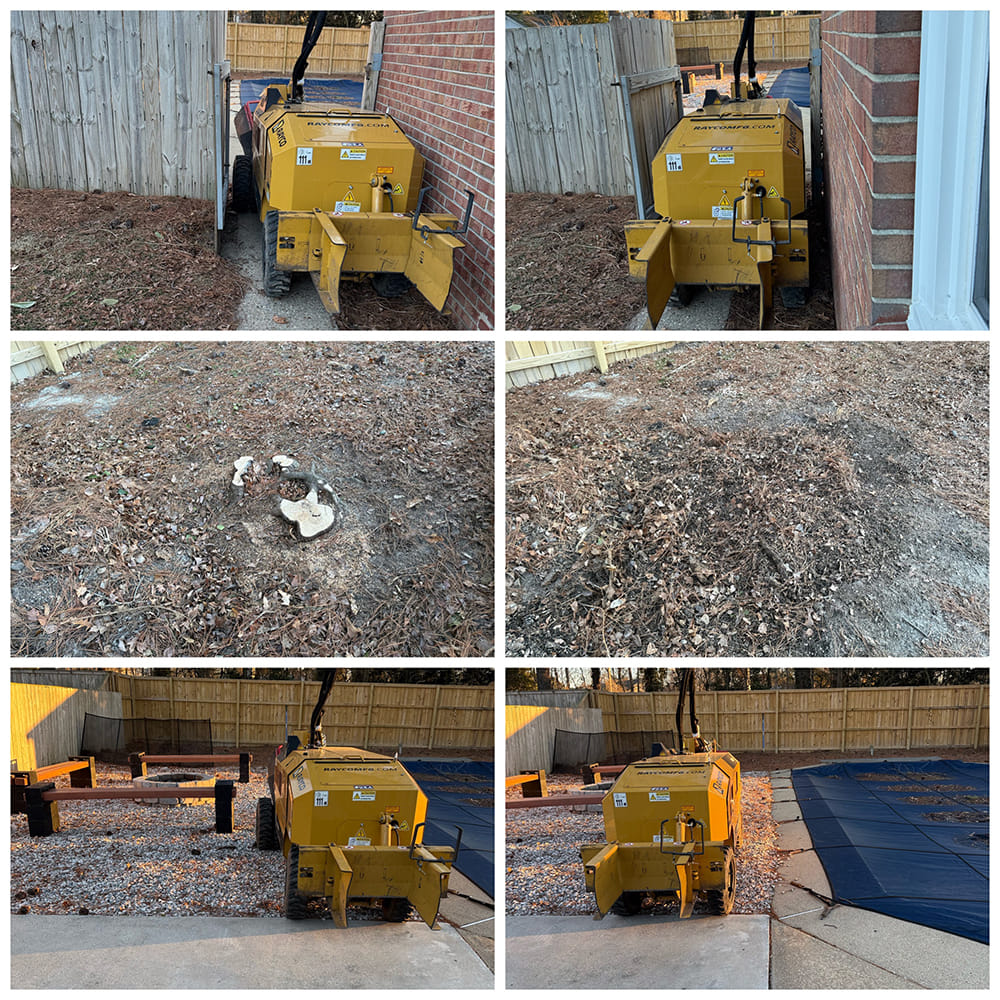
We’ve been called out to re-grind stumps that other companies left wrong — raised, uneven, or ground too shallow for topsoil to fix.
It happens in Virginia Beach and across Hampton Roads more than it should.
A re-grind typically costs in the same range as the original job — $200 to $500 for most residential stumps depending on how much material needs to be removed and what condition the area is in.
Sometimes it costs more because we’re working around topsoil and chips that were already added on top of the incomplete grind. Often we don’t really know or understand the scope of the work until after we have started.
By the time a homeowner has paid for the original job and the re-grind, the cheap quote turned into a more expensive outcome than just hiring a professional operator the first time.
Why Equipment Size Matters
Professional stump grinding equipment — the kind capable of grinding wide enough and deep enough to finish a job correctly in a reasonable amount of time — costs upwards of $100,000.
That’s the machine we run.
Smaller, lighter equipment can technically remove a stump. But it often can’t generate the torque and cutting width needed to address the full root flare in a timeframe that makes good business sencse, and operators running smaller machines frequently compensate by grinding only what’s easy — the stump itself — and leaving the edges.
When you see a quote that’s significantly lower than the market rate, ask what machine they’re using. A professional will tell you without hesitation and be able to explain how it can handle every aspect of your job, in detail.
Questions to Ask Before You Book
Before hiring any stump grinding company in Virginia Beach or Hampton Roads, these are worth asking:
- What size grinder are you using and is it commercial-grade?
- How wide do you grind around the perimeter of the stump?
- How deep do you go below grade and what grade are you referencing?
- What will the area look like after the chips are removed and topsoil is added?
- Are you insured and do you submit 811 tickets before every job?
A professional operator answers all of these clearly. Vague answers on any of them are a signal.
If a Previous Job Was Done Wrong — We Can Fix It
If you’ve already had a stump ground and the finished area isn’t flat, we can assess what’s there and tell you exactly what it would take to correct it.
Text us a photo of the area — show us the mound or the uneven surface — and we’ll give you a straight answer on what the re-grind involves and what it costs.
We’d rather you not need us for this. But if you do, we’ll take care of it right.
Stump ground wrong and the yard still isn’t flat? Text us a photo — BROOTFORCE STUMP Co. assesses re-grind jobs and fixes them right. Free estimates throughout Virginia Beach and Hampton Roads.